Case Study: Illinois Public Transportation Electrification
Project description
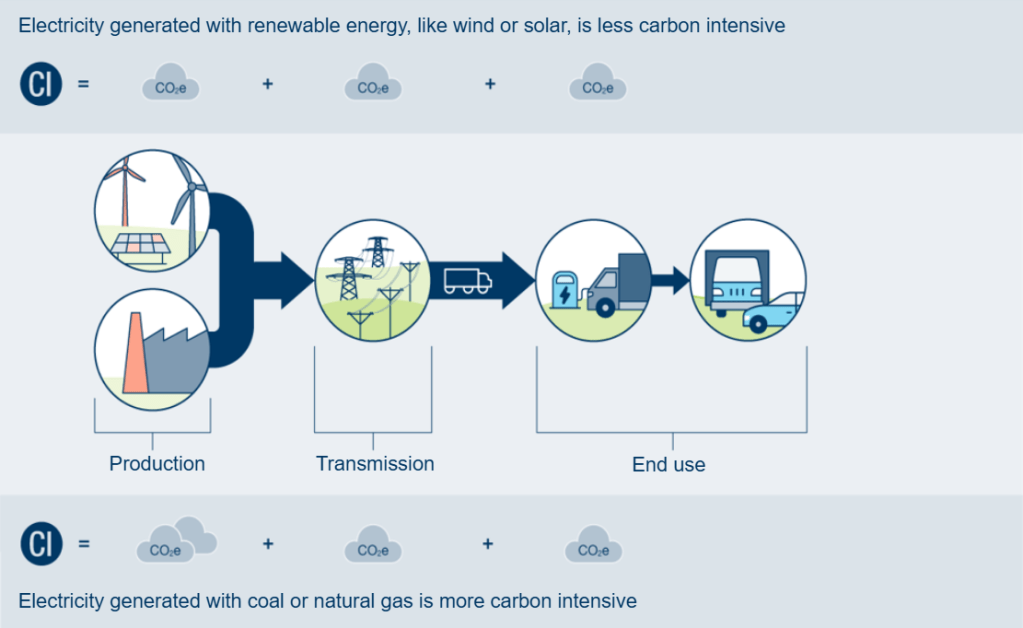
Since the revenue generated by clean transportation standards depends on relative emission reductions, it is important to understand factors that contribute to electric vehicle emissions. Electric vehicles don’t have any emissions associated with operation. All emissions come from electricity sourcing, transmission, and production. Different vehicles with varying grid scenarios will generate a number of credits specific to each scenario.
This study was conducted with two scenarios: one using the current electricity power grid in Illinois, and a second using a 100 percent carbon-free grid. This resulted in a range of possible revenues. For both grid scenarios, we examined the credit revenue for five types of vehicles: passenger vehicles, school buses, transit buses, delivery trucks, and long-haul trucks.
Key takeaways
A clean transportation standard (CTS) would direct hundreds of millions of dollars in credit revenue to transportation electrification in Illinois. This would improve the business case for electrification and result in significant economic, environmental, and public health benefits for the state:
- The proposed Illinois clean transportation standard would require fuel producers to reduce the average carbon intensity (CI) of transportation fuels used in the state by 25 percent within 10 years.
- The CTS would result in direct investment in a variety of clean and alternative transportation fuels in the state, including electrification.
- Individual electric vehicles would generate thousands to hundreds of thousands of dollars under a CTS.
- If the electric grid manages to achieve 100 percent carbon-free electricity sources, the amount of credit revenue generated increases: the policy is based on CI.
- The CTS doesn’t only benefit passenger vehicles—it strengthens several sectors of the transportation field, including school transportation and the delivery sector.
- Using the 100 percent carbon-free electricity generation mix, passenger light-duty electric vehicles would generate $4–9 thousand cumulative credits.
Highlights
- We found the lifecycle greenhouse gas emissions from electricity generated in Illinois are projected to be less than 15 percent of those for gasoline and diesel by 2027.
- Light-duty electric vehicles—including passenger vehicles or those used in government or corporate fleets—would generate significant credit value under a CTS, allowing electric fleet owners to lower their operating expenses.
- Although electric vehicles can cost more up front than gasoline vehicles, credit revenue under a clean transportation standard would shorten the payback period and allow electric fleets to recover that initial investment more quickly.
- Electric vehicle fleets that choose to source 100 percent carbon-free electricity would earn additional credit revenue.
Introduction
As more of the country’s industrial sectors achieve electrification, the transportation sector is following suit. Because the transportation sector is the largest emitter of greenhouse gases, increasing the number of electric vehicles on the road would have environmental and public health benefits.
These benefits include fewer climate impacts and cleaner air, resulting in fewer transportation-related public health impacts such as asthma and heart disease, especially along highways that have historically been built through lower-income neighborhoods.
Over time, the Illinois power grid has been getting cleaner, which results in fewer greenhouse gas emissions from the transportation sector and more credit generated under a clean transportation standard.
Despite many benefits, barriers to transportation fleet electrification remain. Namely, many types of electric vehicles currently have higher purchase prices than comparable gas and diesel vehicles.
For example, the price of an electric school bus typically ranges from $320,000 to $440,000, nearly double the price of a diesel bus, which averages around $150,000. A CTS like the one currently under consideration in Illinois would provide financial support for electric vehicles, improving the business case for electrification.
In this study performed by the Great Plains Institute, five types of electric vehicles in Illinois are shown to have the potential to generate thousands of dollars a year in credit revenue under a CTS.
What is a clean transportation standard?
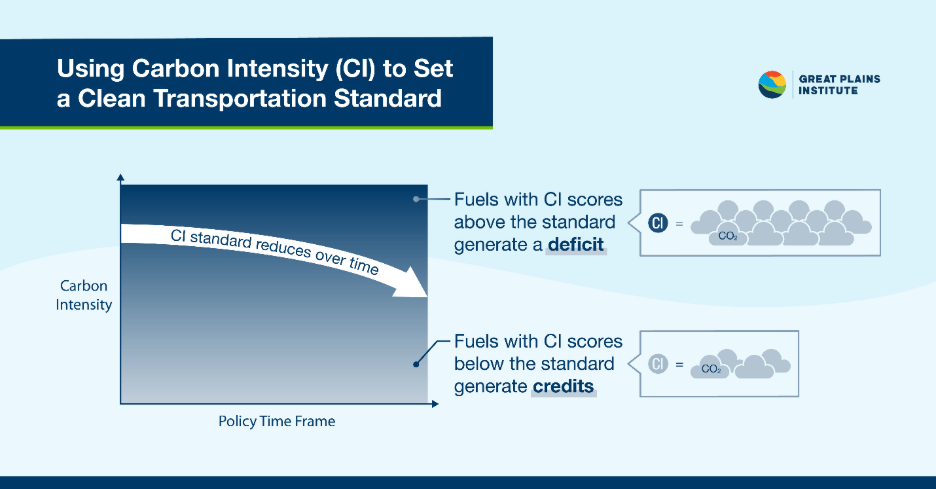
A clean transportation standard is a proposed market-based policy that would reward fuels that offer a greenhouse gas advantage in the transportation sector, without picking technology winners or losers. It sets a standard, known as a baseline CI standard, for reduced CI of transportation fuels over time.
CI measures the greenhouse gas emissions of a specific fuel throughout its life time. Fuel producers receive incentives in the form of credits for offering low-carbon fuels and decarbonizing the fuel supply chain.
To comply with the program, fuel producers who do not meet the annual standard must purchase credits from lower-carbon fuel producers or pay a fine. Producers that meet, or exceed, the standard generate credits based on the difference between their fuel’s unique CI and the annual standard.
Figure 1. How a clean transportation standard works
Source: Developed by Background Stories, used with permission.
Note: The graphic above illustrates the process of a clean transportation standard and the CI score required to generate credits and acquire deficits over the course of the standard.
Figure 2. Fuel lifecycle emissions
Source: Developed by Background Stories, used with permission.
Note: This graphic breaks down the calculation of a CI score derived from electricity generation. The CI score is an accumulation of the carbon emissions associated with producing, transmitting, and using electricity.
The Illinois Clean Transportation Standard Act
The Senate Bill 41 would create a clean transportation standard and require fuel producers and importers to reduce the CI of Illinois’ transportation fuels by at least 25 percent below 2019 levels within 10 years.
With a clean transportation standard, Illinois fuel consumers would enjoy more choices and have increased access to cleaner fuels, often available at a lower cost. An IMPLAN (an software that models economic scenarios) economic impact analysis by Horizon Climate Group found that the policy would result in $1.5 billion in economic benefits to households over a 17-year period. Annually, the policy would generate 7,000 full-time jobs and contribute $622 million to the state in labor income.
The CTS would, specifically, generate significant benefits for clean fuel producers. According to the Horizon Climate Group IMPLAN analysis, these benefits include the following revenue:
- $1 billion annually for electricity producers
- $234 million annually for ethanol producers
- $269 million annually for biodiesel producers
- $53 million annually for renewable diesel producers
- $43 million annually for biofuel farmers
- $479 million annually for renewable natural gas producers
In addition to generating direct revenue in the state’s clean fuel sector, the program would reduce Illinois’ reliance on imported fuels and increase the use of homegrown energy.
Electricity in a CTS
Electric vehicles stand to benefit significantly from a CTS. Under the policy, electric vehicles generate credits as they have significantly lower lifecycle emissions than gasoline vehicles.
Electricity as a fuel is projected to have a progressively lower CI score as the electric grid gets cleaner, therefore generating notable revenue over the course of a CTS.
Based on Great Plains Institute’s scenario analysis, an Illinois clean transportation standard could provide between $300 million and $600 million annually for transportation electrification by 2030. By 2040, the CTS could provide between $6 billion and $12 billion.
The credits go to the owner of the charger. People or businesses who set up private chargers can make money under a CTS. If the revenue is directed to utilities, they can reinvest it to support electric vehicle adoption.
This can include building out the charging corridor, which makes charging more accessible and addresses range anxiety, or providing electric vehicle purchasing incentives. There are several ways for electricity users to benefit from a CTS.
Modeling carbon intensity of electricity
Credits for electric vehicles vary based on the CI of the electricity used to charge the vehicle. This intensity depends on the fuel mix used to generate the electricity.
Electricity produced primarily from clean energy sources, such as wind and solar, emits less carbon dioxide (CO2). CI scores are reported in grams of carbon dioxide equivalent per megajoule (g CO2e/MJ) to compare fuels on an equivalent energy basis. To account for the efficiency of different vehicles, a specific energy economy ratio is used for each vehicle type. As a result, the following figures reflect the amount of megajoules (MJ) needed to drive one mile.
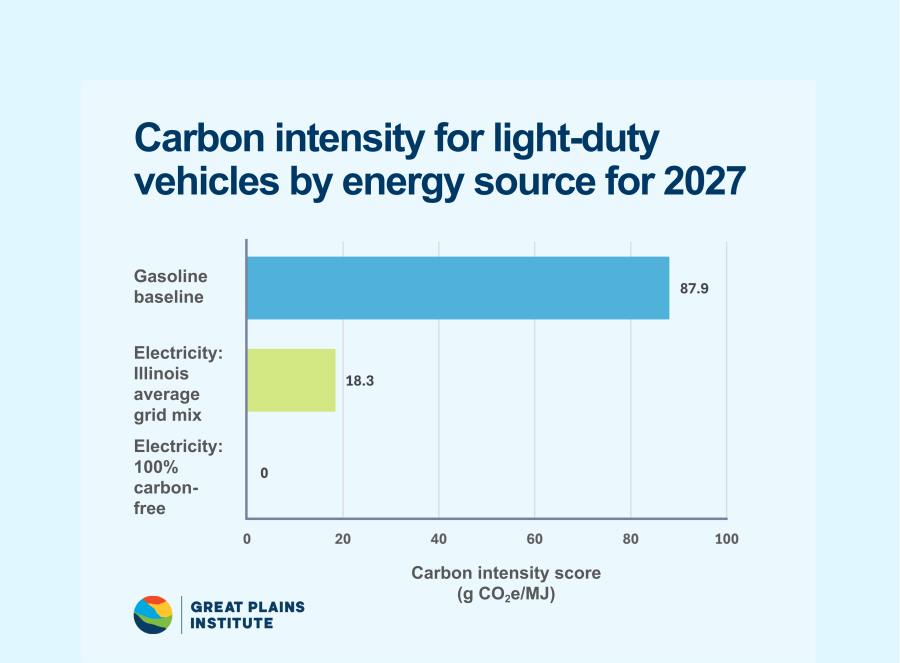
Figure 3. Carbon intensity for light duty vehicles by energy source for 2027.
Source: Figure made by the Great Plains Institute.
Note: This graph shows the CIs of the two grids that were used in the light duty vehicle electricity portion of this study. The middle bar is Illinois’s average mix. It is the default, and the CI is 13.2 g CO2e/MJ. The 100 percent clean grid’s CI is 0 g CO2e/MJ. Included at the top of the graph is the gasoline CI (88.3 g CO2e/MJ) as a baseline to illustrate how much fewer emissions are associated with electrifying the transportation sector.
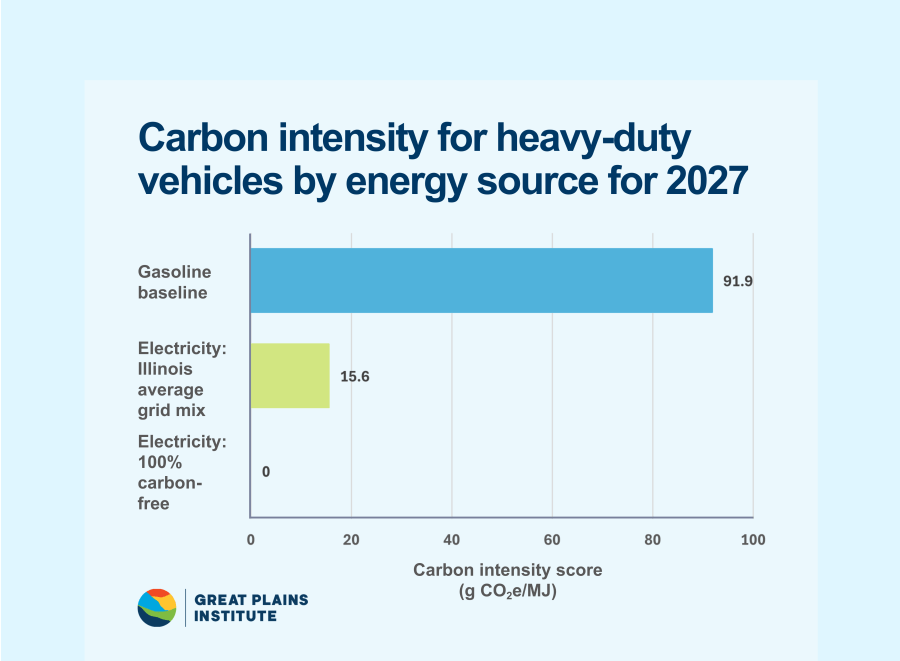
Figure 4. Carbon intensity for heavy duty vehicles by energy source for 2027
Source: Figure made by the Great Plains Institute.
Note: This graph shows the diesel CIs, which are applied to heavy-duty vehicles. The middle bar is Illinois’s average mix. It is the default, and the CI is 11.2 g CO2e/MJ. The 100 percent clean grid’s CI is 0 g CO2e/MJ. Included at the top of the graph is the diesel CI (91.9 g CO2e/MJ) as a baseline to illustrate the significantly lower emissions associated with electrifying the transportation sector.
Key assumptions for this model
- The Great Plains Institute calculated CI scores using the 2025 revision 1 of Argonne National Laboratory’s R&D GREET model.
- The Illinois-average and 100 percent carbon-free-sourced electricity generation grid mixes use Argonne National Laboratory’s state-specific projections derived from the National Renewable Energy Laboratory’s 2023 Standard Scenarios report.
- The CI standard in this study is consistent with Illinois’s goal of a CTS standard that’s 25 percent below 2019 levels within 10 years.
- The energy efficiency ratios used in this analysis come from the National Renewable Energy Laboratory’s 2023 Electric Vehicle Efficiency Ratio report. An energy efficiency ratio is a non-dimensional number that the CI is divided by to account for a vehicle’s efficiency when turning fuel into energy. The energy efficiency ratio used for light-duty and heavy-duty vehicles are 3.4 and 4, respectively.
- The assumed number of miles each vehicle type travels per year:
- Passenger vehicles: 12,581 miles
- School buses: 14,084 miles
- Delivery trucks: 30,000 miles
- Transit buses: 42,940 miles
- Long-haul trucks: 84,000 miles
Opportunity for Illinois to generate revenue under a clean transportation standard
Credits are generated by fuels with carbon intensities lower than the standard. Over time, the CI decreases based on the policy. The difference between a fuel’s CI and the CI set by the standard in any given year determines the number of credits the fuel can generate.
The dollar value of credits varies according to market forces. Based on historic credit prices from existing CTS markets, the credits would likely be between $100 and $200 per ton. The policy and market forces would determine the actual allocation and distribution of credits to appropriate entities, including the vehicle operator, electric utility, charging station operator, and others.
The following modeled results are based on the Illinois Clean Transportation Standard Act, Senate Bill 41, which would require a reduction in the average CI of transportation fuels by 25 percent from the 2019 baseline within ten years.
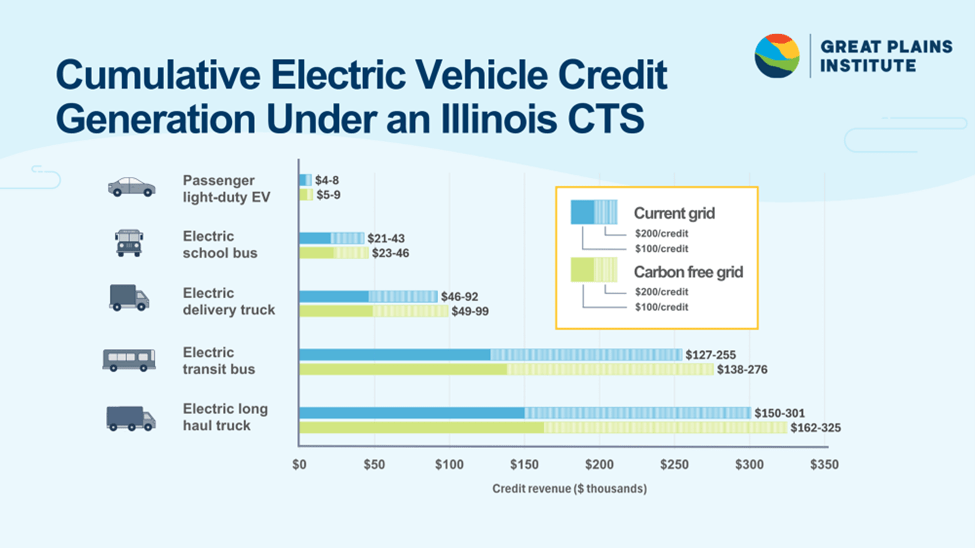
Figure 5. Cumulative electric vehicle credit generation under an Illinois CTS
Source: Figure made by Background Stories, used with permission. Updated by Great Plains Institute.
Note: The graph above displays the results of the study. The blue bars represent the revenue generated with the current grid, while the green bars represent the carbon-free grid revenue. The different shadings show the different credit prices: $100/credit for the solid shading and $200/credit for the translucent shading. This determines the revenue ranges. Under a CTS, the reduction in emissions that each vehicle type can achieve would generate a significant amount of revenue. Passenger vehicles could generate between $4 and $9k, electric school buses between $21 and $46k, electric delivery trucks between $46 and $99k, electric transit buses between $127 and $276k, and electric long-haul trucks between $150 and $325k.
Next steps: Passing the bill
The Illinois Legislature will reconvene on January 14 for the 2026 legislative session. Advocates expect bill author Senator David Koehler to reintroduce his Clean Transportation Standard Act for consideration in the Senate.
If the Legislature passes the bill, vehicle fleet operators, school districts, and individuals stand to benefit from significant financial support for electrification.

